

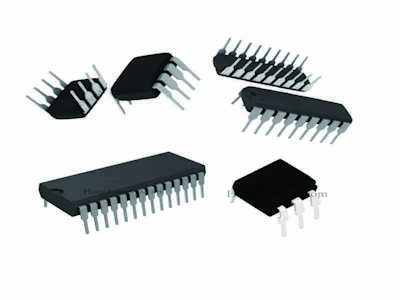
В мире электроники, где точность и надежность являются ключевыми факторами, инструментальные усилители играют незаменимую роль. Эти устройства, часто сокращенно называемые ин-ампы, представляют собой специализированные усилители, предназначенные для усиления малых сигналов в условиях высокого уровня шума и помех. Их применение охватывает широкий спектр областей, от медицинской диагностики и промышленной автоматизации до научных исследований и аудиотехники. В этой статье мы подробно рассмотрим, зачем именно нужен инструментальный усилитель в электронике, разберем его принципы работы, преимущества перед другими типами усилителей и конкретные примеры использования. Мы также обсудим ключевые характеристики, такие как высокий коэффициент подавления синфазного сигнала (CMRR), низкий уровень шума и легкость настройки, которые делают ин-ампы идеальными для задач, требующих высокой точности. К концу чтения вы получите полное представление о том, почему эти компоненты являются неотъемлемой частью современной электронной инженерии и как они способствуют улучшению качества и надежности электронных систем.
Инструментальные усилители, как следует из их названия, являются "инструментами" для точного усиления сигналов. Они обычно состоят из трех операционных усилителей, соединенных таким образом, чтобы обеспечить высокий входной импеданс, низкий выходной импеданс и отличное подавление синфазных помех. Это делает их особенно полезными в приложениях, где сигналы слабы и окружены шумом, например, в датчиках температуры, давления или в биомедицинских устройствах, таких как электрокардиографы (ЭКГ). Без инструментальных усилителей многие из этих систем были бы подвержены ошибкам и неточностям, что могло бы привести к серьезным последствиям в критических областях, like healthcare or industrial control.
Одним из основных преимуществ инструментальных усилителей является их способность усиливать разностные сигналы while rejecting common-mode signals. This is achieved through a differential input stage that amplifies the difference between two input voltages, effectively canceling out any noise that is common to both inputs. For instance, in a balanced audio system, an instrumentation amplifier can extract the desired audio signal from background noise, resulting in clearer sound reproduction. Similarly, in data acquisition systems, they help in accurately measuring small voltage differences from sensors, ensuring that the data collected is reliable and precise.
Another key aspect is the ease of gain adjustment. Many instrumentation amplifiers allow the gain to be set using external resistors, making them highly versatile and adaptable to different applications. This flexibility is crucial in prototyping and design phases, where engineers need to fine-tune the amplification without redesigning the entire circuit. Additionally, their high input impedance minimizes loading effects on the source, preserving the integrity of the signal being measured.
In terms of practical applications, instrumentation amplifiers are ubiquitous. In the medical field, they are used in ECG machines to amplify the tiny electrical signals from the heart, which are often in the millivolt range and susceptible to interference from other electronic devices or muscle movements. In industrial settings, they interface with strain gauges and thermocouples to monitor parameters like force, pressure, and temperature, enabling precise control in manufacturing processes. Even in consumer electronics, such as smartphones and wearables, instrumentation amplifiers contribute to improved sensor accuracy for features like heart rate monitoring or environmental sensing.
Despite their advantages, instrumentation amplifiers are not without challenges. They can be more complex and expensive than simple op-amp configurations, and their performance can be affected by factors like temperature drift and component tolerances. However, advancements in integrated circuit technology have led to the development of monolithic instrumentation amplifiers that offer excellent performance in a compact package, reducing these issues and making them more accessible for a wider range of applications.
In conclusion, the instrumentation amplifier is a vital component in electronics due to its ability to provide precise, noise-resistant amplification. Its importance cannot be overstated, as it enables the accurate measurement and processing of weak signals in noisy environments, driving innovation in various fields. Whether in life-saving medical equipment or efficient industrial systems, the instrumentation amplifier proves time and again why it is an essential tool for engineers. As technology continues to evolve, we can expect further improvements in their design, making them even more integral to the future of electronics.
To delve deeper, let's consider the historical context. The development of instrumentation amplifiers dates back to the mid-20th century, with early versions being built from discrete components. The advent of integrated circuits in the 1970s revolutionized their design, leading to devices like the AD620 from Analog Devices, which became a industry standard. This integration not only reduced size and cost but also improved performance metrics such as CMRR and noise figure. Today, companies like Texas Instruments, Linear Technology, and STMicroelectronics offer a wide range of instrumentation amplifiers tailored to specific needs, from low-power versions for battery-operated devices to high-speed variants for data acquisition systems.
From a theoretical perspective, the operation of an instrumentation amplifier can be analyzed using basic circuit theory. The typical three-op-amp configuration consists of two input buffers and a difference amplifier. The input buffers provide high impedance, preventing loading of the signal source, while the difference amplifier amplifies the voltage difference between the two inputs. The overall gain is determined by the ratio of resistors, and by carefully selecting these values, engineers can achieve the desired amplification with minimal error. Mathematical models, such as those involving transfer functions, help in predicting behavior under various conditions, aiding in design optimization.
In educational settings, instrumentation amplifiers are often introduced in courses on analog electronics or measurement systems. Students learn to build and test these circuits, gaining hands-on experience with concepts like differential signaling and noise rejection. This practical knowledge is invaluable for aspiring engineers, as it prepares them for real-world challenges where signal integrity is paramount. Moreover, simulation tools like SPICE allow for virtual experimentation, enabling the exploration of different configurations without the need for physical components.
Looking ahead, the future of instrumentation amplifiers is bright. With the rise of the Internet of Things (IoT) and smart sensors, there is a growing demand for low-power, high-precision amplification. Innovations in semiconductor technology, such as the use of new materials and fabrication techniques, are pushing the boundaries of what these amplifiers can achieve. For example, developments in MEMS (Micro-Electro-Mechanical Systems) sensors often rely on instrumentation amplifiers to interface with the analog world, enabling applications in autonomous vehicles, robotics, and environmental monitoring.
In summary, the instrumentation amplifier is more than just a component; it is a cornerstone of modern electronics that facilitates accurate and reliable signal processing. Its role in enhancing the performance of electronic systems makes it indispensable, and as we continue to advance technologically, its importance will only grow. By understanding its principles and applications, engineers can harness its full potential to create better, more efficient designs that meet the demands of an increasingly connected and data-driven world.
Предыдущая статья: Мониторинг тока эффективность и безопасность вашего оборудования
Следующий пост: повышение эффективности с помощью мониторинга температуры